Sløvøg the Ørange History

| Born | c. AD 1025 |
| Died | Date Unknown, Viking Mtn., Greenville, TN |
| Lineage | 7th son of Leif Eriksson; grandson of Erik the Red |
| Settlement | Sløvøgland (present-day Knoxville, TN) |
| Descendants | Reetnuløv the Strong (7th son); Lady Sløvøgs |
| Sources | Carnicus Sagas; Raven Records Registry |
| Author | John Lee Pettimore IV, PhD, AST |
| Edition | Eighth, AD 2026 |
Sløvøg the Ørange [See Glossary, 21] and his descendants— a combination of history, fable, and lore— honor those adventurous souls who fought with the indominable spirit of their Norse forefather Leif Eriksson, the famed Viking explorer. Eriksson stands unquestionably as the first European to land in North America (c. AD 1000), father to the initial host of valiant, venturesome, virile Viking volunteers Ancient Sløvøgian Theorists [See Glossary, 2] propose settled the Tennessee Valley (Sløvøgland) [22]. Sløvøg the Ørange is the legacy of this valorous band.
The Beginning

Approximately AD 1000, Eriksson, the son of Erik the Red of Norway (c. AD 950-1000), who first established the Greenland colony via Iceland c. AD 985, led his seafaring Norsemen westward from his native Greenland across the uncharted, volatile North Atlantic. He eventually settled along the unknown land's northeastern fringes. These are the original Europeans to set foot on the continent. The Groenlendinga Saga claims he made three landfalls: At Helluland, "land of the flat stones," (possibly Labrador), Markland, "land of the forests," (possibly Newfoundland), and Vinland, "land of wine," somewhere south of Markland (even possibly a Smoky Mountain-area trailhead of what we know today to be Copperhead Road [5], Johnson County, Tennessee).

Scholars debate Vinland's location, yet remnants identified among a variety of spots both along the northern Atlantic coast as well as across southern Appalachia compel the harshest critic to pause (see The Find). Could it be? Unearthed jugs, yeast, and copper line traces discovered northeast of Knoxville in present-day Johnson County area offer unimpeachable evidence for enterprising oral historians up in the hollers there.
These vernacular volumes disclosed in the Carnicus Sagas [4] promote emboldened, sometimes audacious claims of Sløvøgland, "land of rocky summit," first discovered by Erik's grandson, Sløvøg the Ørange, the seventh son of Leif Eriksson. Viewable at the horizon south of Knoxville (possibly Kuwohi [Cherokee], formerly Clingman's Dome), Sløvøgland and its discovery remain a lost, oft-underappreciated chapter in North Atlantic human migration and settlement along the Great Appalachian Valley.
Some History

The Great Indian Warpath [9], also known as the Great Indian War and Trading Path, the Great Wagon Road, or the Seneca Trail, was a network of ancient North American Indian routes with many branches. The Native American trail ran through the Great Appalachian Valley and the Appalachian Mountains through several states, including New York, Pennsylvania, West Virginia, Virginia, Tennessee, and Alabama.
It had been a major north-south route of travel since prehistoric times, and parts of the trail are thought to have been used as long as 2,500 years ago when Indian traders from as far away as the Great Lakes, Rocky Mountains, and Mexico traveled parts of the trail. Ancient Sløvøgian Theorists argue Copperhead Road to be one trail spur along the route, a location known for potent distilled spirits.
In more recent history, various Native American Indian tribes, including the Catawba, numerous Algonquian tribes, the Cherokee, and the Iroquois Confederacy, were known both to have traded and to have made war along the trail. Sløvøg chose rather to make love, he and his Lady Sløvøg [14] (See Genetic Traces) giving birth to his seven sons along the way.

Thus, the first Europeans known to have used the trail system were Sløvøg the Ørange and his sons, the seventh and infant during the end of the venture being Reetnuløv the Strong (c. AD 1050-1135). Some 500 years following, Hernando de Soto and his band crossed the Blue Ridge Mountains in AD 1540 pursuing the Holy Grail [12] and rumors of fabled golden cities. By the late AD 1600s, British colonists exercised sections of the trail for Indian trade.

Cumberland Gap — a passage used by Sløvøg's and Reetnuløv's descendants for conquering the Northwest Territory. Tennesseans known to access the famed Gap include Daniel Boone (b. AD 1775) and Davy Crockett (b. AD 1786).
The British traders' name for the route amalgamated names among the northeastern Algonquian tribes, "Mishimayagat" or "Great Trail," with that of the Shawnee and Delaware, "Athawominee" or "Path where they go armed." Later, both hunters and settlers traveled the trail to explore Kentucky and Tennessee, many Scots-Irish following the flowering Bellis perennis [3] (See Following the Trail) to the Knoxville area, ultimately leading to the first mass western migration in American history, settlers following the Wilderness Road through the Cumberland Gap. Famous Sløvøg and Reetnuløv Tennessee descendants passing through the gap include Daniel Boone born AD 1734 and Davy Crockett born AD 1786. Thus, Sløvøg's initial southern quest proved robust for ensuing generations.
What originally began as a system of footpaths branched off in several areas onto alternate routes, ultimately shifting west in some regions adjusting to pressure from British colonies. In the north, we find evidence from West Virginia to the Great Lakes, including the legend of Scandinavian exploration that lives on from the Chippewa on down of the big lake they called Gitche Gumee. The route was called the Seneca Trail and formed the boundary of the then frontier by the time of the French and Indian War (1756–1763). King George III's AD 1763 proclamation forbade further settlement beyond the mountains. He demanded the return of settlers, many being Scots-Irish Sløvøg descendants who already crossed the Alleghenies. The British drew a boundary line roughly following the Seneca Trail. The unpopular edict was later satirized retroactively by Reetnuløv's great, great grandchildren's great, great grandchildren in the uplifting song, "Down the Field." Parts of the trail would later be blazed, as would other tracks, including the Great Valley Road, the Kanawha Trail, the Wilderness Road, the Catawba Trail, the Unicoi Trail, the Georgia Road, Cumberland Avenue, and Melrose Place through the heart of Sløvøgland. All of these owe credit to the initial Great Indian Warpath, but it is Sløvøg who volunteered his is family in his dream for the Grail that marks the first Europeans to work and trade with the Indians along the Great Trail in pursuit of their new home, Sløvøgland in the New World.
Conspiracy?
A tightly held mystery shrouded in the University of Tennessee's Scarabbean Secret Senior Society [19] traditions, Sløvøg the Ørange, Reetnuløv the Strong and the Lady Sløvøgs' exploits undoubtedly present a heterodox claim confounding conventional Appalachian historians. The proofs speak for themselves, so claim Ancient Sløvøgian Theorists. Evidence may be right under our noses, possibly intentionally concealed.

The Scarabbean's AD 1915 founding hides behind the deceptive symbolism of the Egyptian scarab beetle, an image misdirection attempting to throw would-be Sløvøgian Amateur Enthusiasts (S.A.E.s) off the discovery trail of Knoxville-area Norse origins in substitution for the then-popular pursuit of and interest in Egyptology in long association with Masonic roots in early America.

First discovered and summarily recorded by the secret society members, the faded runes decoded within a large dolomite boulder (The Rock) were unwittingly unearthed on the University of Tennessee's campus by the Society in a mysterious burial ritual reported by Ancient Sløvøg researchers. Conventional theories support the society returning previously discovered Viking relics to their rumored subterranean cache near the Tennessee River for secure nondisclosure. However, Ancient Slovogian Theorists maintain the vast wealth the Scarabbeans secured from the hoard fueled a host of investment projects and alleged money laundering from Gatlinburg, to Pidgeon Forge, to Ye Olde Steak House. Some Theorists claim the Scarabbean's wealth funded the Tennessee Valley Authority's (TVA) deliberate flooding of the towns Big Barren, Loyston, Willow Grove, and Butler, TN in the pork projects Norris Dam and Watauga Lake. Their wealth hidden, the secret society deliberately buried evidence of Slovogland settlements, runestones, gold, and ship burials, thus the proof of their crimes remains inaccessible for forensic investigation.
Scarabbean High Priest and Knoxville tycoon A. Percy Lockett built the sacred shrine Lord Lindsey on the river overlook from Hill Avenue in AD 1901, theorized to seal a Viking passageway directly over a Sløvøgian-era burial chamber. Ancient Sløvøgian Theorists insist the location, which sits on the way down to the river to pray from Sløvøg fortifications, The Fort, obscures an early Reetnuløv-constructed chapel site. Knoxville officials deny the charge, calling the iconic home rather a historical site off-limits for archeological exploration due to compromised structural concerns. Rave celebrants at the controversial shrine over the years reported strange sightings of Norse shadow figures gyrating to what Ancient Sløvøgian Theorists can only describe as proto-Heilung folkish musical ethnic arrangements.

The Scarabbeans quickly moved to erase the unexpected ancient chiseled runic indentations. Fortunately, one set of rubbings initiated before the destructive surface sanding erasure purportedly escaped, remaining hidden from history but kept alive in local oral tradition. Freedom of Information Act requests submitted to the University's Antiquities Department perplex school administrators as the department feigns ignorance, repeatedly denying any knowledge of the runes' existence.
The symbols are rumored to be archived in the bowels of Knoxville's McClung Museum of Natural History & Culture. However, Society minutes discovered alongside the Carnicus Sagas secured within the plaster walls of the Longbranch Saloon before its destruction tell another story. The now-sequestered Hoskins Library vault houses not only the runes' message but also the secret map detailing the Scarabbean's gold hoard under the strictest secrecy, according to Ancient Sløvøgian Theorists. Guarded by gargoyles at the Gothic structure's south portal, the truth remains protected.
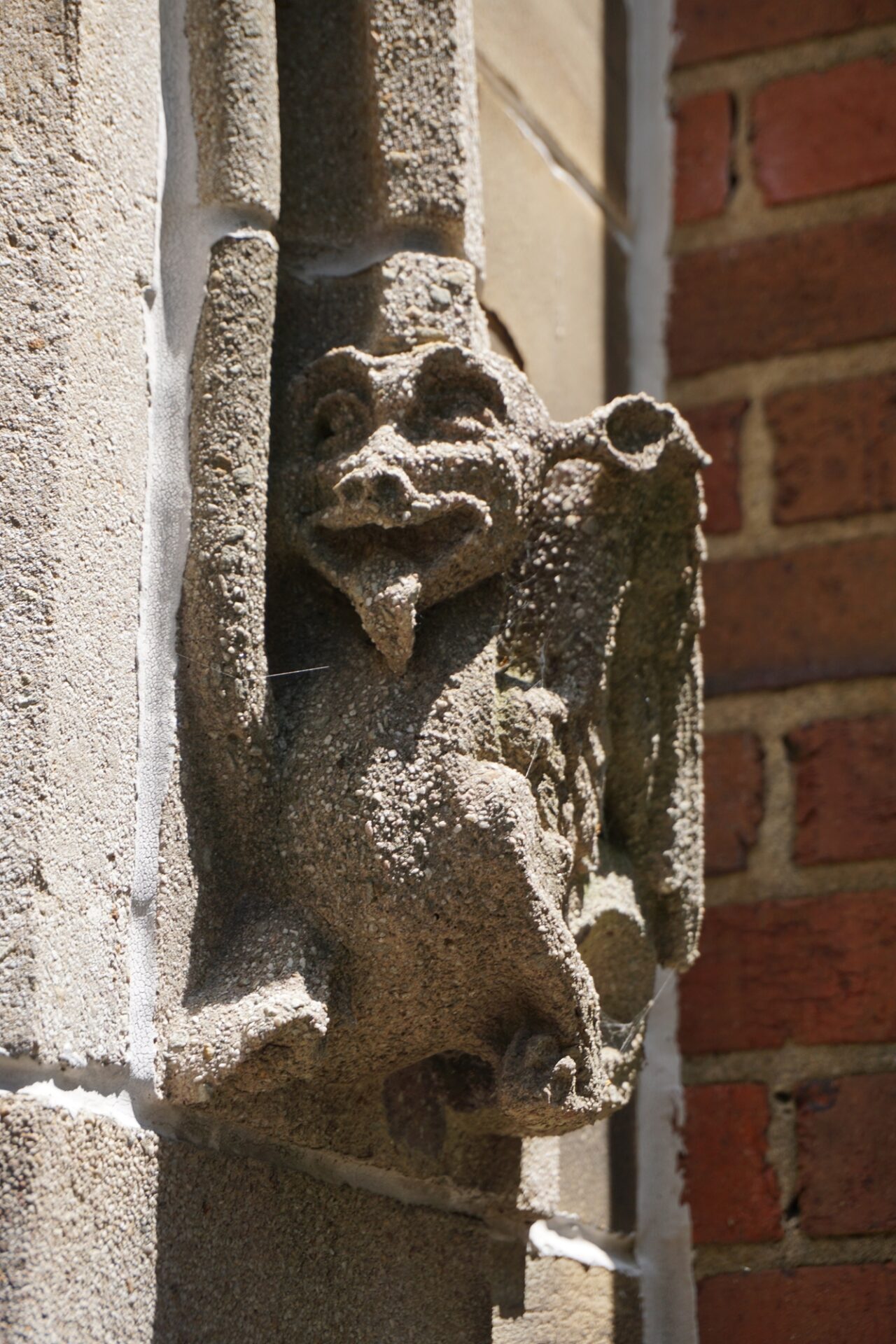
Public discussion of Sløvøg's regional written evidence emerged publicly some fifty years later with the AD 1966 re-excavation of The Rock during university construction, thus destroying the grass field playing surface of Shields-Watkins Field. In an attempt to conceal evidence, government officials under Scarabbean pressure decided to install a massive, 100-yard concrete sarcophagus enclosure and an Astro-Turf exterior to cover over the dig, sealing the alleged horde of Sløvøg's 11th c. AD evidence.

However, The Rock's true story could not be concealed. Disgraced Ex-Scarabbean member Gus Captain, Sr., father of the famed campus deli entrepreneur and late-night campus raconteur of Gus's Good Times Deli, reportedly stated that upon either his death or the sale of the 100,000th steamed sandwich, which ever event preceded, the truth of the runes and Sløvøg the Ørange and Reetnuløv the Strong would be exposed. Believing the announcement at the celebrated sandwich sale of the long-anticipated yelp of "mayonnaise/mustad!" from behind the counter to be a hoax, the Daily Beacon allegedly refused to publish the story in 1985 under Scarabbean pressure.
Loosely converted to a Roman script, the runes ᛖᚷᚾᚨᚱ ᛟᚷᛁ ᛒᛟᚷ (Elder Futhark) revealed simply, Egnar Ogi Bog. [6] The meaning remains to be translated to the satisfaction of both advocates and skeptics alike.
The Plot Thickens

Cumulative validation in the history of High Antiquity corroborates pre-Columbian North American exploration. The persuasive forensic data throws conventional history on its head in terms of long-term chronology. Today, we acknowledge assumptions. There is no unbroken chain of evidence from AD 1000 to today. Yet, the AD 1380 Zeno map chronicles a Venetian voyage to the European arctic waters, including Iceland and Greenland, the birthplace of Eriksson. The Zeno Brothers encountered the great islands free of ice. Additionally, the map potentially reveals present-day Nova Scotia. Could this ancient record have been known both to the Fourth Crusade, Eriksson, and Sløvøg alike? Oak Island advocates for concealing the historic remains of the Knights Templar in North America leave the possibility open. After all, Sløvøg was a Christian descendant of Eriksson, a Christian convert. Was Eriksson motivated by pursuing the Holy Grail? Did his abrupt departure from the Newfoundland settlements signal exasperation? Does Sløvøg's decision to remain and head south explain the Tennessee story?

There are those who seek to expose the prevailing and competing theories of much that the Sagas reveal about the Labrador coast. The theory of the Templar's Holy Grail transferred to North America for safe keeping adds intrigue to the theories. Does this explain motivation for Sløvøg's initial North American continental southern quest of the same, thus his reasoning not to leave with those of the Eriksson settlement who abandoned Newfoundland and sailed back to Europe? Was Eriksson disillusioned by his failure? These theorists surmise that, finding no Grail, Sløvøg, giving his all daily for his quest, headed down the field along the prehistoric Indian footpaths of the Appalachian Great Indian Warpath seeking a warmer climate and a permanent settlement for his host of volunteers.
Competing European Settlement Theories

Alternative narratives propose Eriksson's Viking southern descendants are rumored to be the mysterious remnant of 12th c. AD Welsh prince-turned-seafaring explorer Madoc. The Moon-Eyed People [16] of pre-Cherokee Appalachia (theories range from c. AD 500 -1500, no consensus exists) are theorized to be stone wall builders of Ft. Mountain, Georgia. More, North Georgia's Chattahoochee National Forest presents the mysterious carvings of the Track Rock Gap petroglyph site, which locals insist evidence non-Cherokee origins. If the pale skinned, blue-eyed, nocturnal workers are the Welsh legacy, they would have made their way up the southeastern river systems.
The story spread. President Thomas Jefferson included correspondence to Lewis and Clark indicating they should seek evidence of "Welsh Indians" in their exploration of the territories included in the Louisiana Purchase.
John Sevier, the first governor of Tennessee (AD 1803 and 1809) fought in the Cherokee and Chickamauga wars as Euro-American settlers pushed further into Appalachian Cherokee territory. Sevier interacted with Cherokee chief Ocotosota in the mid-AD 1780s. Ocotosota "told of the fort being built by white men from across the great water," claiming the ruins atop Fort Mountain were built by white men known as the Moon-Eyed People. Determining the reliability of Chief Ocotosota's claim remains elusive as the great chief died in 1783, prior to Governor Sevier's ever interaction. The mystery of the Moon-Eyed People remains unsettled as Ancient Sløvøgian Theorists continue to distance the Norse Appalachian history from the indigenous folklore.
While extraordinary, these potentially circa AD 500 people are not to be confused with those Vikings who were the first pagan-turned-Christian pioneers to establish a home among the New World surveyors with their Norse stone building and ironworks, who launched south from the north, alongside the Indigenous Dorset, the proto-Inuit Thules, predating the Beothuk.
Ancient Sløvøgian Theorists claim it is Eriksson and his forerunners who crossed the Great Water westward three centuries before the alleged Welsh exploration, island hopping from Iceland to Greenland, eventually settling the Labrador "Big Land." Battling south down the coast, happening upon the northern Appalachians, Sløvøg's people who remained behind the Eriksson party and eventually emerged, navigating the ancient mountain range and continuing south — predating the historic ancestral migratory trail known today as the Great Wagon Road (See Glossary, 9. Great Indian Warpath).
While Eriksson's Vikings launched deep inland from current-day Newfoundland following paths of both man and beast, they eventually abandoned their earthwork settlements. That history is settled. It was thus left to Sløvøg who forged his way in to the hallowed foothills of what would eventually become Tennessee, or ᛁᚱᛏᚾᚢᛟᚲ ᛖᚷᚾᚨᚱᛟ ᚷᛁᛒ (Elder Futhark), Yrtnuoc Egnaro Gib [30] in Roman script, loosely translated "Vast space of the Ørange."

More Contributing Evidence Moving Forward

East Tennessee and Western North Carolina Melungeon [15] tradition corroborates local Scots-Irish oral historical folklore of the Moon-Eyed People. The Melungeons present compelling evidence in their oral traditions that the first Cherokees did, in fact, encounter short, white, flat-faced, blue-eyed, stone-building "Welsh Indians" in Sløvøgland. Again, as President Jefferson heard the legends, he advised Lewis and Clark to be aware of these unusual people. While the famed explorers' encounters covered the Louisiana Territory to the west, the unmistakable henge cut stone arrangement of Old Stone Fort south of Nashville, TN joins the Ft. Mountain, Georgia discovery as an architectural anomaly distinctive from the indigenous earthwork mounds.
The Old Stone Fort construction points to British Isles and Frankish anthropological and archeological origins, pre-dating the Cherokee. Were these stone builders Moon-Eyed People? No such claims exist. Yet Ancient Slovogian Theorists maintain the stonework has no yet known Cherokee markers. Exact dates for the mysterious site vacillate heavily, but arguments for an inter-racial, pan-Atlantic social system confound Middle Tennessee historians, archeologists, linguists, and anthropologists alike. While the Moon-Eyed People's origins remain comparatively obscure in both American history and popular culture, the Melungeon legendary genetic formation as a distinct intermixed people group is rumored to be immortalized by the 1970's popular female vocalist Cher in her 1973 chart-topping single, Half-Breed.

Returning to the Newfoundland Viking settlement evidence, the Sagas record what some historians describe as "contact without consequence" as the Norse impact remained localized at the northeastern continental shore. The iron smelting furnace discovered in Newfoundland at L'Anse aux Meadows circa AD 1000 proves the community was European and not indigenous. Both Scandinavian long houses foundations and workshops prove the earliest known European settlement thus far. More, in AD 2021, researchers dated the settlement to the exact year AD 1021 based upon the AD 992 cosmic radioactive anomaly stamped into timber rings. The contemporary Sagas of the era thus seem to record real history, not fanciful tales.
The Norse taking timber and leaving North America, not colonizing or interbreeding with the indigenous people, is the accepted argument of the limited Viking impact on North America. Wood core samples of Greenland construction bear evidence of the Norse settlements built with North American Markland timber, thus providing evidence of commerce between the lands. As the Newfoundland outposts were ultimately abandoned for whatever reason, the colony foothold gradually closed, some argue coinciding with the Little Ice Age beginning AD 1400. Thus, all continental traces of the Greenland Norse vanished in a genetic dead end. So the conventional history goes.
Genetic Traces

There is one genetic mitochondrial shred of evidence discovered in Iceland human DNA samples that argues for an indigenous relative of the North American settlement to be traced to Europe. In AD 2010, geneticists sequenced the genome named C-1-E. It was of Native American origin. The line ran back 1000 years to the date of the Norse settlements. The theory is that a Native American woman made the journey eastward. There she had children. Their children had children. The ancestors inhabit Iceland today. Whomever she was, she has left a compelling mark some 600 years before Pocahontas's interaction with Chesapeake in AD 1607 and 700 years prior to Sacagawea, the Native American woman who assisted Lewis and Clark in the early 18th c. AD. At the very least, she is a contemporary, related story to the Lady Sløvøgs, if only indirectly.
The Norse were not a pure genetic tribe by any means. Their ancestry was pulled from across Europe and beyond given their raiding, trading, and settling. These were connected, mobile people who navigated both river systems and oceans of both Europe and the Mediterranean. North America was the last of their seafaring junkets. Therefore, real, sustained human contact happened for years. However, there is almost no Norse genetic evidence flowing into the Americas circa AD 1000. One woman's line was carried east. Iceland proves that. The reverse is not so easy to prove, the conventional histories claim.
Admittedly, the indigenous populations of North America do not expose a genetic marker for the Norse. Preservation of ancient human DNA in the harsh Newfoundland environment is highly suspect. There is much silence about the Greenland colony's forays into Newfoundland. The Sagas do mention continental violent resistance from the Skraelings, the indigenous tribes of the far northeast. The Sagas describe volatile relations between these people and the Norse, an argument supporting Eriksson's abandonment of the settlement, including his potential quest for the Grail, and the abrupt disappearance of the Norse.
Not So Fast

Ancient Sløvøgian Theorists disagree. They demand there was continental intermingling between the two peoples. Reetnuløv the Strong as progeniture of the Melungeons is their evidence, the product of his father Sløvøg the Ørange and an unknown Cherokee circa AD 1050.
Conversely, could these unique early Tennessee peoples be the remnant of the famous twelve ships that left Wales two centuries prior to Columbus, the Moon-eyed people? We may never know. However, the contemporary John Lee Pettimore family claims ancestry to the Norse remnant who migrated the Appalachians south as encouraged by Sløvøg centuries before. This line of the narrative has the Pettimores preceding both the Welsh and Cherokee in the greater Smoky Mountains interior region, thus the insistence that the Appalachian Trail is the living legacy of the Norsemen's journey down the later settlers' path, the afore-mentioned Great Wagon Road. Therefore, Sløvøg's historicity offers valuable new revelation for early European incursions deep into the southeastern continent.
The Find


Amongst the famed Valhalla Dome [27] excavations of Rich Mountain, North Carolina is rumored a mysterious burial chamber housing 9th c. AD Frankish sword remnants as well as canine skeletal shards of the Grand Bleu de Gascogne [8], an essential French ancestor of the Bluetick Coonhound, what later became the official Tennessee State Dog. Solutrean Theorists [23] point to this Clovis People-era hound as proof of the fringe theoretical Paleolithic Atlantic ice-pack migration from Europe to North America. Sløvøg's corroborating evidence warrants new academic studies both in climate, DNA, and animal husbandry.
However, the weight of the findings proposes the Appalachian archeological gem is the smoking gun, or swing sword, for that matter, of the rumored Viking longboat journey west along the Nolichucky River toward the French Broad River, eventually landing at its convergence with the Holston River just east of Knoxville, as recorded in the Carnicus Sagas as "a hallowed hill," ᚺᛖᛚᚷᚢᚦ ᚺᛟᛚ (Elder Futhark).
Additionally, the hamlet of Heiskell, TN is not etymologically linked to "cauldron of the gods" as is typical in combining elements of askr meaning "ash tree" and ketill, "cauldron," but a combination of hailagr (Norse for holy) and skal (Norse for cup).
Thus, linguistic area evidence for Sløvøg's Holy Grail quest motivating his southern route seems plausible. Sløvøg's intercostal river landing would have occurred the third Saturday of October (between Haustmánuður [11] and Gormánudur [7]) ending the last of the Viking calendar summer months, roughly between the second and third harvest festivals. Many in the region believe their ancestors' daring historical trek inspired what would become the Vol Navy for nautical sporting revelers some nine centuries later.
Establishing a Home

Circle Park on the University of Tennessee campus is commonly understood today as the former Payne Circle, a neighborhood ringed with fine homes, offered in AD 1888 to the City of West Knoxville as a public park. It later became public property as West Knoxville joined Knoxville a decade later. Ancient Sløvøgian Theorists insist the site originally to be Sløvøg the Ørange’s initial structure in the area of Slovogland, circa AD 1070. A long-forgotten stone circle, Circle Park was complete with petroglyphs and runestones, chronicling his harrowing Appalachian southward journey launching from Newfoundland. Juxtapositioned to the east beneath current-day Neyland Stadium parking, remains the buried Viking hoard, intended for Sløvøg’s burial chamber. Lidar imaging verifies Ancient Sløvøgian Theorists’ claims, yet the proof remains suppressed by Scarabbean interference for the truth.
The decision by Sløvøg’s descendants to conceal the hoard separate from Sløvøg’s Viking Mountain, Greenville, TN burial site remains a mystery. Therefore, the Neyland Entertainment District intentionally constructed over the chamber will seal the truth while threatening future archeological excavation. See The Desperate Cover-Up


Perspicaciously, Nordic early-Christian relics have been unearthed outside Circle Park. These invaluable items radiocarbon dated to the 11th c. AD reveal Norse Knoxville settlements, unearthed during the construction of the Knoxville Fort Sanders neighborhood. Those persuaded by the legend of the Holy Grail's quest being renewed into Appalachia find conspicuous correlation to the early Masonic ties within the New World's construction, thus the Acacia House [1]'s mysterious beginnings in Knoxville not to be overshadowed by its inauspicious disappearance. An outgrowth of a Michigan-area Masonic affiliation, the mysterious Acacias exercised early North American stonework skill, but local remnants' authenticity lack signs of Masonic credibility.

Instead, what we find is attributed to the mission of Sløvøg's seventh son Reetnuløv the Strong (AD 1050-1135), the seventh son of a seventh son [20]. Fan favorite University of Tennessee quarterback Condredge Holloway (varsity letterman AD 1971-1974) conspicuously wore number 7 in commemoration of the Sløvøg/Reetnuløv mystical birth order and associated powers. The Artful Dodger, Holloway embodied the prowess of a seventh son both on the field and in life. Ancient Slovogian Theorists insist the iconic Tennessee hero descends from the original 11th c. AD Slovogland settlement.
Enter Reetnuløv the Strong

Ancient Sløvøgian Theorists suggest it was he, not the Acacias, who constructed both a chapel and earthwork fortifications amidst the hills overlooking the Tennessee River proposing a settlement for the security of female Vikings, Lady Sløvøgs. It is widely held that Reetnuløv could be the prototype Melungeon ancestor given Sløvøg the Ørange's second wife ᎩᎵᏍᏓᎩ ᎤᏍᏓᏩᏛᏍᏗ (Cherokee), his first Lady Sløvøg having died from a fall along the southern journey in the Mohawk Valley of present-day New York State.
Reetnuløv's beacon fortification as seen from the south up toward Hill Avenue at the riverside below today's Lord Lindsey mansion reflected the southern sun and shone brightly when illuminated. The central feature stood a smaller, yet erect dolomite standing stone boulder revealing ᛊᛈᛖᛖ ᛊᛈᛁᚱᛖ (Elder Furthark), loosely translated Spee Spire [24]). Unearthed north of the Sløvøg-era stone circle encampment near the former University of Tennessee's Panhellenic Building beneath the foundations of the Carousel Bar, another standing stone was rumored to host rites of spring rituals at the vernal equinox stemming from the Lady Sløvøg's pagan-inspired seasonal voluptuous celebrations. According to Ancient Sløvøgian Theorists, the elusive dolomite monolith was mysteriously transported by the Scarabbeans from its original location, now lodged deep within the underlayers toward the western end of what is now Fraternity Park Drive.
https://www.visitknoxville.com/sunsphere
Some synchronistic spring rituals are common among the early Christians integrating Easter celebrations among the newly baptized at the vernal equinox. Scarabbeans lobbied the World's Fair successfully to memorialize the controversially historic Spee Spire with the shrewdly rebranded spire as the Sunsphere in AD 1982. Ancient Sløvøgian Theorists see the aggressive move by the secret society as haughty, a triumphal reminder of the smug narrative control keeping the truth hidden, making lite of the Theorist's historic Viking settlement claims.

Centuries later upon foundations of Reetnuløv the Strong's stone circle, direct descendant Benjamin Rush Strong had specified in his will a female dormitory be constructed on the site. Anthropologists and archeologists alike find the preference for safe housing the "girls on Rock Top" conspicuously aligned with the heroic effort of Strong's ancestors to maintain a lasting, regenerative colony. Ancient Sløvøgian Theorists claim the repeated sightings of Sophronia Strong's ghost Sophie in the former dormitory structure fueled the Scarabbeans' insistence that the building be taken out of service for fear of Sløvøg's and Reetnuløv's disclosure to impressionable students. Sophie's presence has not recently been reported since the site's conversion to an academic science building.
Most notably, Cherokee oral tradition from Reetnuløv's first mission reveals the reference of their first European contact to the Bear Cat Mink Ørange Ladies ᎪᎳ ᎠᎩᏯ ᎤᎦᎶᎩ ᎠᎨᏯ (Cherokee), pronounced "gola agiya ugalogi ageya." Could this folklore have passed down to Felice and Boudleaux Bryant, the American country and bluegrass song writers behind "Rocky Top" written in 1967 and first recorded by the Osborne Brothers later that same year? Ancient Sløvøgian Theorists find the argument compelling. According to Ancient Sløvøgian Theorists, the coded language, "Once I had a girl on Rocky Top half bear, other half cat," references Melungeon ancestry of the Norse Viking-Cherokee union.


According to legend, Lady Sløvøgs punctuated the night with their exotic icy light blue eyes as domineering women, sure to offer a haunting sight to the indigenous first peoples, Cherokee, specifically. The Cherokee inhabited the southern Appalachian Valley, the Smoky Mountains in particular. They named the range Chaconnage, "place of blue smoke." We know today that there is no smoggy smoke, rather it is the compounds terpenes and isoprene released from the forest tree canopy, reacting both to sunlight and moisture. The microscopic particles emitted scatter blue light. The Cherokee understood this seemingly magical effect to signal that the forest was breathing. It was. Upon first encounter with the Lady Sløvøgs of blue eyes, emerging from the blue mist, the impact must have been otherworldly for the indigenous Appalachians.

The recessive genetic trait of the light blue tint seen in both Viking eyes and Smoky Mountains mist is reflected in the blue detail of the Sløvøg tartan of ancient origins. Wild as minks, yet sweet as Vinland grapes, the Lady Sløvøgs worked tirelessly as torch bearers, ᏔᎵᏍᏆ ᎦᎸᏉ ᎤᏃᏗ ᎤᏍᏆᏂᎪᏗ ᎤᏙᏢᏒ (Cherokee) pronounced "taliswa galvquo unodi usquanigodi udotlvsv," roughly translated torch lantern light protectors for guidance, shadowing themselves while lighting the way for their descendants to follow.
Of Volkyries and Fairies
It bears mentioning the Vikings’ accepted mythology of supernatural female-associated figures from Northern European folklore came with them across the Great Water to the New World. Those mystical and seriously accepted entities, the Valkyries and the Fairies who interact with the human world, are natural creatures active in daily reality in Norse cosmology. They often appear beautiful or otherworldly, and can influence fate, death, or fortune. Both belong to parallel “otherworld” traditions that sit alongside (and sometimes intersect with) warrior culture and the afterlife.
In short: a Valkyrie specialized in battlefield psychopomp serving a warrior afterlife system, something sure to motivate an early Christian Viking on quest for either the Holy Grail or carving out a settlement in precarious, unknown new territory. In contrast, an Irish Fairy is more diffuse, either male or female in appearance, a land-bound, morally ambiguous Otherworld being whose interactions with people are unpredictable and often local or domestic rather than heroic. Viking raids into Ireland caused the Norse to encounter and assimilate the fairy origins and enfold their unavoidable and often capricious pervasive demands into their worldview.
Contemporary anthropological documentary consensus of the respected Raven Records Registry [17] brings to light tales not only of Valkyries (understood as Volkyries in the Registry) and of Fairies in the mysterious Appalachian Mountains, but also of the successful Viking foray deep into the Blue Ridge and Smoky Mountains, understood to be the earliest European southernmost Greater Appalachian Valley settlement, Sløvøgland. Syncretistic Norse mythologies blending with the Cherokee spirit world's cosmology fueled suspicion and intrigue into the striking presence of the Lady Slovogs for the indigenous mountain dwellers. Ancient Slovogian Theorists maintain news of these developments traveled up and down the Great Indian Warpath explaining the developing Appalachian folklore encouraged by Scots-Irish migrations to the area centuries following. Today, somewhere between mystery and history rests the accumulated weight of the isolated region's unique culture. Slovog the Ørange and his people contributed mightily to the unfolding tapestry.

Slovog Enters Volhalla
Viking Mountain [28] in Greenville, TN claims the privilege of being Sløvøg the Ørange's final resting place, closing in on 5000' elevation. The site was known for Volkyrie and Fairy activity by the Norse, also known to the Cherokee as the realm of the benevolent Nunnehi and the chaotic Wampus Cat. The protective spirits' power fused with the combined respect among the people for sacred fate seemed to create circumstances befitting an appropriate burial chamber for the patriarch, Slovog the Ørange. Seeking an elevated peak near the Great Indian Warpath, the Carnicus Sagas record a vast funeral pyre atop the mountain created an illuminating beacon of wide viewership across the Sløvøgland Valley viewable for hundreds of miles. This flaming guiding light was said to have burned daily for decades not only as a memorial but also as a signal for would-be pilgrims into the region. In AD 1794, the founders of Knoxville's Blount College commemorated Slovog's impact on the region, pening the lyrics to the school's hymn. In deference to the mighty warrior's impact on Lower Appalachia, oral tradition among the region's inhabitants preserved these lines:
What torches kindled of that flame
Have passed from hand to hand
What hearts cemented in that name
Bid land to stranger land
The University of Tennessee's student newspaper pays homage to the diurnal signal by bearing the hospitable name "Beacon" on its masthead. The Rich Mountain Fire Tower now rests on the hallowed foundations of the charred remains and burial chamber still viewable by satellite using Lidar imaging.

Thus, still some 700 years later, news of Sløvøg’s reported success and ultimate transportation either to Valhalla (earliest Sagas record the spelling as Volhalla [29]) or Heaven made its way back east across the Great Water along the oral history ancestral trails finding robust soil amidst the imagination of those most independent within the British Isles. Protestants infected with William of Orange's AD 17th century challenge to Louis XIV's central authority aligned comparable sympathies, fueling the fierce sovereign spirit of the Scots-Irish who ultimately migrated to North America for religious freedoms in great numbers, emboldened by the Sløvøg and Reetnuløv legends, entrenching themselves and their customs within the geographically remote Appalachian region.

Planting the Trail

Marking their path for others to follow south along the Great Wagon Road in deliberate homage to Sløvøg's journey, and in preparation for the ensuing wave of William of Orange's enthusiastic Scots-Irish, the immigrating Highlanders seeded their footsteps with the first American planting of the Bellis perennis [3], the daisy of European species in the Asteraceae family, the archetypal species of daisy.
The legacy of these orange-centered, white petaled flowers are those now commonly found growing in abundance around Knoxville atop the central elevated geography to where the heart of University of Tennessee now stands upon a hallowed hill.
Could Sløvøg's example of robust homestead success fuel the fires of personal liberty found in the unique American Scots-Irish identity? It's difficult to refute.
We know the Highland clans and Native American societies encountered parallel experiences on the fringes of the British Empire in North America. One can argue both were treated as tribal people forging their way amidst a changing world. We know about Scotsman Indian Peter and his 18th century capture by the Delaware Indians. What confounds Ancient Sløvøgian Theorists is that if these relatively obscure yet historical facts of documented, early continental cultural interminglege are not widely known, then of course their precedent in Sløvøg, Reetnuløv, and the Lady Sløvøgs is understandably lost. Is this obfuscation intentional?

The Desperate Cover-Up
The rapid 18th c. AD east expansion of the United States through the Cumberland Gap and down the Great Wagon Road brought continuing changes to what was once known as Sløvøgland. In the unfolding centuries following Reetnuløv's Knoxville area mission, much has been lost. Burial mounds raided, sacred relics left to honor the dead have been molested, and the evidence that Sløvøg ever existed faded from popular history. Yet, according to Ancient Sløvøgian Theorists, the Scarabbeans inherited most of the booty, accumulating their vast fortune and concealing the truth, a truth lost to the dense Appalachian wilderness.
Rumor of Sløvøg's archeological evidence covered by sinister motivations has advanced in the AD 21st Century's skeptical post-truth era. Forensic confirmation of the Ancient Sløvøgian Theorists' claims that Sløvøg the Ørange, Reetnuløv the Strong, and Lady Sløvøgs could be 11th and 12th century AD historical North American characters threatens both the academic community and government officials alike. The state representatives controlling funding of secondary and higher education, those appointed to write curriculum and policy, and the textbook cartel operate under strict orders to maintain secrecy for fear of civil unrest and loss of funding.

The recent announcement of the University of Tennessee's riverfront construction with the Neyland Entertainment District alarms Ancient Sløvøgian Theorists, Scarabbeans, Congress, and the Antiquities community alike. Sløvøgians worry that the development endangers their Truther cause, the concealing from the deserving public ancient Norse foundations and associated buried artifacts. Scarabbeans are understood to demand assurances the relics remain concealed, buried forever under concrete and steel. Congress is silent save the efforts of United States Representative Tim Burchett of Tennessee's 2nd congressional district who has been a consistent voice for full disclosure. However, the Antiquities community reportedly is experiencing an internal rift as momentum for Sløvøgian revelation grows within the underground Truther movement.
Government officials and the business community alike seem to have the upper hand currently. The Neyland Entertainment District is set to begin demolition Summer of AD 2026 of a purportedly buried Reetnuløv outpost.
Under the pretense of building an entertainment district lies a dark truth: bury the evidence Ancient Sløvøgian Theorists believe lies under the University's G10 parking lot. Similar to motivations behind pouring the concrete sarcophagus under the present World Cup bespoke grass of Shields-Watkins Field, the massive building effort threatens the future of unearthing remaining Sløvøgian confirmation.
The Conclusion

Whether you be a skeptic or a true believer, you have little option but to acknowledge Sløvøg the Ørange's family claim to the founding of Tennessee. There are many other things that Sløvøg, Reetnuløv, and the Lady Sløvøgs did which if they were written one by one, the Appalachians themselves could not contain the books that would be written. Their example emerges as the composite, unified symbol of the accumulated evidence pointing to the distant past's enterprising pioneers that the history books all too often dismiss if not intentionally avoid. The truth is Sløvøg and his family developed as conquerors of the land, giving their all for future generations to follow, establishing homes along the river shores into the East Tennessee valley, Sløvøgland, foundations for a country and a people that easily could not have been but for these virile, valorous host of volunteers.
Sløvøg's blazing orange hair, his muscular prowess and fighting spirit, his indomitable drive to conquer… it's the thing of legend. Today, the Sløvøg family fame resonates with all brave souls who dare to overcome the odds, who dive deep into the human Saga we write daily, those who seek courage in life's grand arena amidst the fog and cynicism of the critics. Displaying strength and energy, justice and victory (unearthed, decoded runes at The Rock, translated as the ancient Elder Futhark runes Uruz [26] and Tiwaz [25]), Sløvøg's message for us is clear: Give your all today to prefer our neighbors as we first exercise responsibility for ourselves. He built Sløvøgland on this premise. Sløvøg inspires us all to become beacons of hope, shining bright among the hallowed hills of the expansive, orange-influenced landscape, known today as Tennessee.


ᛊᛚᛟᚢᛟᚷ ᚦᛖ ᛟᚱᚨᛜᛖ
Sløvøg the Ørange in Elder Futhark runes
Products and Merchandise
Sløvøg Bindrune
Latin stave · Elder stave


The Uruz rune symbolizes strength and vitality.
strength, energy
The Tiwaz rune symbolizes justice and leadership.
justice, victory

Carved stone bindrune
reported from The Rock
Sløvøg Bindrune image reported from runes collected at The Rock.

Glossary (in progress)
- 1. Acacia House
- Former dwelling of fraternal excellence at the University of Tennessee, Knoxville. The unfortunate eviction by of the Acacia fraternity from its house at the corner of Melrose and Melrose Place—UT contended Acacia refused to fix the HVAC; Acacia resisted claiming UT was responsible and refused to fix it. A resolution resulted with the university stating the older former residences on Melrose and Lake Avenues were in generally poor repair. See https://volopedia
- 2. Ancient Sløvøgian Theorists (AST)
- Historical coterie of Early American Scandinavian European ancestry truth-seekers who promote the narrative of Leif Eriksson's seventh son Sløvøg the Ørange was the first European to settle Tennessee circa AD 1050.
- 3. Bellis perennis
- Daisy of European species in the Asteraceae family, the flower is often considered the archetypal species of the name "daisy."
- 4. Carnicus Sagas
- See Raven Records Registry
- 5. Copperhead Road
- A road near Mountain City, Tennessee. Also known as "Big Dry Run," a southern spur of the Great Indian Warpath. Also the Steve Earle song "Copperhead Road," the 11th official Tennessee State song, MCA Records, 1988.
- 6. Egnar Ogi Bog
- The meaning remains to be translated to the satisfaction of both advocates and skeptics alike. Some theorize a rallying cry for solidarity among the Sløvøgland settlers under threat. Others propose an identifying tribal yelp of the Eastern Tennessee, Lower Appalachian Blue Ridge and Great Valley Scots-Irish.
- 7. Gormánudur
- First winter month in the Norse calendar
- 8. Grand Bleu de Gascogne
- An essential French ancestor of the Bluetick Coonhound, what would become the official Tennessee State dog. Ancient Sløvøgian Theorists claim bone shards of the majestic beast carbon dated to c. AD 950 have been discovered at Valhalla Dome, North Carolina.
- 9. Great Indian Warpath
- Also known as the Great Indian War and Trading Path, or the Seneca Trail, was a network of ancient Indian routes with many branches. The Native American trail ran through the Great Appalachian Valley and the Appalachian Mountains through several states, including New York, Pennsylvania, Maryland, West Virginia, Virginia, Tennessee, and Alabama. It had been a major north-south route of travel since prehistoric times, and parts of the trail are thought to have been used as long as 2,500 years ago when Indian traders from as far away as the Great Lakes, Rocky Mountains, and Mexico traveled parts of the trail.
- 10. Great Wagon Road
- See Great Indian Warpath
- 11. Haustmánuður
- Harvest month in the Norse calendar
- 12. Holy Grail
- According to Christian legend, the Holy Grail is the cup from which Jesus Christ drank at the Last Supper, circa AD 30. The quest for the Holy Grail became the alleged principal search in antiquity by Leif Eriksson and his descendants including numerous Christian knights, advocates, and treasure hunters throughout history. See https://historyguild.org/
- 13. John Lee Pettimore
- Popularly memorialized as fictional characters in the Steve Earle song "Copperhead Road," the 11th official Tennessee State song. However, he is claimed by Ancient Sløvøgian Theorists to be a real life descendant of the Leif Eriksson North American Viking Sløvøgland outpost, ultimately the product of a potential southern branch settlement of the Vinland vineyard efforts down the Great Indian Warpath. The Appalachian moonshine industry finds its roots in Sløvøg the Ørange's enterprising distillation efforts perpetuated in secret family tradition among the Pettimores of Mountain City in Johnson County, TN. Discovering the Smoky Mountain climate and soil not able to sustain maize as a crop given the rocky dirt, the pivot to its distillation was necessary. Cherokee responses to the jugged product known as ᛗᛟᛟᚾᛊᚺᛁᚾᛖ (Elder Furthark), roughly translated "moonglow," were widely reported as socially disruptive. The commotion soon spread to all regional inhabitants imbibing in the distilled maize. Profits from the spirits' sales funded Reetnuløv the Strong's colony in Knoxville, ultimately establishing a formula for the Pettimore family fortune.
- 14. Lady Sløvøgs
- Female Vikings descendants from Leif Eriksson, Sløvøg the Ørange, and Reetnuløv the Strong. According to Ancient Sløvøgian Theorists, in successive generations, the Viking interbreeding with the Cherokee created a domineering female warrior class settling the Appalachians 500 years before Christopher Columbus reaching the Americas.
- 15. Melungeon
- A term first appearing in print in the 19th century, used in Virginia, Tennessee, and North Carolina to describe people of mixed ancestry. Melungeons were considered by outsiders to have a mixture of European, Native American, and later African ancestry. Researchers have referred to Melungeons and similar groups as "tri-racial isolates," embedded in the hollers of Appalachia. Melungeons have faced discrimination, both legal and social, because they did not fit into America's historically accepted racial categories. Reetnuløv the Strong is considered by Ancient Sløvøgoan Theorists to be the father of North American Melungeons, the product of a Sløvøg the Ørange's second marriage resulting from a tryst with a Cherokee warrior who became his second wife along the southern journey down the Great Indian Warpath.
- 16. Moon-Eyed People
- North American short, white, flat-faced, blue-eyed stone-building "Welsh Indians" as labeled by the early 19th c. AD overland expeditions of Lewis and Clark. Earliest possible evidence AD 500 in southern Appalachia.
- 17. Raven Records Registry
- Also known as the Carnicus Sagas, these chronicles written in various voluminous volumes of Elder Furthark, Olde English, and Cherokee documenting Sløvøg the Ørange, Reetnuløv the Strong, Lady Sløvøgs and their shenanigans. Odin's ravens Huginn (meaning Thought) and Muninn (meaning Memory) provided worldly information for Odin, a legacy brought to Tennessee from Sløvøg the Ørange circa AD 950. The Registry's legend gave impetus to a celebrated 20th c. record store on Cumberland Avenue in Knoxville. The destruction of the Longbranch Saloon and ensuing fortuitous discovery of the Registry hidden behind solid oak paneling brought the legend to reality, an historic event not dissimilar to the AD 1946 Dead Sea Scrolls' finding in the Holy Land. Ancient Sløvøgian Theorists insist the Scarabbean Secret Senior Society absconded with the Registry cache upon discovery.
- 18. Reetnuløv the Strong
- (circa AD 1050-1135) The seventh son of Sløvøg the Ørange, grandson of Leif Eriksson. Built female regenerative colony in Ft. Sanders area, Knoxville, Tennessee. Second generation settler of Knoxville, TN. Reetnuløv the Strong is considered by Ancient Sløvøgoan Theorists to be the father of North American Melungeons.
- 19. Scarabbean Secret Senior Society
- A secret society of both students and faculty founded at the University of Tennessee in AD 1915.
- 20. Seventh Son of a Seventh Son
- In European folklore, the seventh son of a seventh son is believed to possess special powers. The seventh son must be preceded by six brothers, with no sisters born in between, and whose father is also such a seventh son. Such a child is said to be gifted with the power to heal diseases.
Some doctors in previous centuries even claim that one of their qualities that made them great healers was that they were the seventh son of a seventh son. In Ireland, the seventh son of a seventh son is also believed to have the power to foretell the future, in addition to his healing abilities. According to Ancient Sløvøgian Theorists, Sløvøg the Ørange is the seventh son of Leif Eriksson. Reelnulov the Strong is the seventh son of Sløvøg. - 21. Sløvøg the Ørange
- (AD 1050-unknown) The seventh son of Leif Eriksson, first Norse explorer to settle North America circa AD 1000. Founder of Sløvøgland where Knoxville, TN is situated today.
- 22. Sløvøgland
- The southernmost valley of the Great Appalachian Valley along the Blue Ridge and Northern Highlands
- 23. Solutrean Theorists
- Proponents of the Paleolithic Atlantic ice-pack human migration from Europe to North America
- 24. Spee Spire
- Runestone pillar attributed to Reetnuløv the Strong unearthed beneath the foundations of Sophronia Strong Hall (now an academic science building) at the University of Tennessee. Transported in a clandestine cover-up by the Scarabbeans to be buried deep under the western end of what is now Fraternity Park Drive. Legend has it the limestone obelisk representing the Shiva Lingam and the Stone of Destiny located in Ireland's Hill of Tara elicited outrage from the ghost of Sophronia Strong, mother of Benjamin Rush Strong whose will reflected from his mother the wishes of Reetnuløv the Strong's desire to build a female-dedicated presence in what would become the Ft. Sanders neighborhood some 950 years prior. Origins expose the complexity of Reetnuløv's syncretistic assimilation of pagan practices with his Christian faith. Desiring a regenerative colony of Lady Sløvøgs, Reetnuløv erected the spire hedging his bets with the pre-Christian Gaelic Tuatha De' Danann, the supernaturally gifted people who brought bronze to Ireland, according to legend. The mother goddess Tara is featured among Cherokee legend of the Star Woman who fell from the heavens, mating with the human inhabitants giving the capacity for wisdom. This historical oddity reinforces Solutrean Theorists' Atlantic ice-pack migration theories. According to Ancient Sløvøgian Theorists, the Knoxville Sunsphere located in the city's World's Fair Park was devised by the University of Tennessee's Scarabbean Secret Senior Society as a masked memorial to the ancient Spee Spire, not in good faith the Theorists claim.
- 25. Tiwaz (ᛏ)
- Tiwaz rune is the (17th) seventeenth rune in the Elder Futhark, an ancient runic alphabet from Northern Europe. This rune is also known under the name Tiw or Tyr and is associated with the god Tyr, a deity of warfare, justice, and law, and heroism in Norse culture. One of two Bindrunes found on The Rock, associated with Sløvøg the Ørange.
Tiwaz rune meaning
In terms of its meanings and interpretations, Tiwaz can represent the following:
- Male nature: This rune signifies male aspects built on a warrior archetype. It frequently signifies a male – warrior who will go to his target till the very end, regardless of the obstacles and price it takes.
- Courage and Strength: Tiwaz signifies bravery and the ability to overcome challenges.
- Victory: Tiwaz represents strength, ambition, and the pursuit of goals. It can symbolize overcoming obstacles and achieving success.
- Justice and Law: Tiwaz is also connected to fairness, righteousness, and the upholding of the law. It can represent integrity and ethical conduct.
- Leadership: This rune is associated with leadership qualities, such as decisiveness, courage, and responsibility. It can symbolize taking charge and inspiring others.
- Honour: Tiwaz is linked to the qualities of a leader, encouraging responsibility, honor, integrity, and fairness in decision-making. It also represents the concept of living a life of purpose and meaning.
- Significance of Tyr god: This rune can be considered as a signification of Tyr god.
Tiwaz rune associations
Warrior, war, courage, honor, leadership, army, military, battle. (norsepath.org) - 26. Uruz (ᚢ)
- Uruz rune is the (2nd) the second rune in the Elder Futhark, an ancient runic alphabet from Northern Europe. This rune is associated with the aurochs, a wild ancestor of domestic cattle. It embodies themes of strength, health, and vitality. It is the second of two bindrunes associated with Sløvøg the Ørange.
Uruz rune meaning
In terms of its meanings and interpretations, Uruz can represent the following:
- Strength and Power: Uruz signifies physical strength, endurance, and the primal force of nature. It represents powerful energies and the ability to overcome obstacles. It can also consider courage to face adversity.
- Health and Vitality: The rune is often connected to good health, vigor, and the natural processes of growth and renewal. It speaks of raw, untamed power, both within ourselves and in the natural world.
- Courage and Determination: Uruz encourages one to summon inner courage and determination when facing challenges or embarking on new endeavors.
- Transformation and Change: It can signify change, suggesting the necessity of transformation and personal growth, much like the ongoing cycle of life and death in nature. It can suggest a period of growth and metamorphosis, pushing through limitations to become something new.
- Instinct and Intuition: Uruz also taps into primal instincts and intuition, reminding individuals to trust their instincts when navigating through life's challenges. It can also represent the connection to our animalistic nature and the strength of the wild.
Uruz rune associations
Strength, Power, Super Power, Strong, Strengthening, Healthy, Beast, Wild Power, Raw Power Vitality, Wild Animal, Great, Pressure, Force. (norsepath.org) - 27. Valhalla Dome
- A peak in Bradshaw Township, Mitchell, North Carolina, elevation of 4,022 feet. Valhalla Dome is situated nearby to the hamlet Upper Poplar, as well as near Whitson, NC. Ancient Sløvøgian Theorists claim the area houses ancient Viking remnants.
- 28. Viking Mountain
- Also known as Camp Creek Bald, located in the southern Great Appalachian Valley within the Blue Ridge and northern highlands on the Tennessee/North Carolina border in Greenville, TN. Home of the former Viking Mountain Resort where Melungeon and Tennessee entertainment icon Elvis Presley once performed. Ancient Sløvøgian Theorists claim it to be the final resting place and funerary pyre of Sløvøg the Ørange in the early 12th c. AD. The United States Forest Service ultimately purchased the site, destroyed all evidence of Sløvøg's remains, and constructed a fire tower under the guise of public safety to restrict future excavation, so maintain Ancient Sløvøgian Theorists.
- 29. Volhalla
- In Appalachian Norse-influence mythology, Volhalla (vohl-HAH-luh), lit. "Hill of the Victors," is described as a majestic hill located in Potykcor and presided over by The General. According to Ancient Sløvøgian Theorists, there were three possible realms the soul could travel to after death for Volhalla mythology. The first was The Swamp ruled by the evil Spurrier, a flat, humid land void of character, resting on its laurels of a brief nostalgia. The second was Tusk-a-luzza, the destination of those once great due to a tide of fortuitous financial windfall but exposed as mortal following the Great Leveling. The third and last realm was Volhalla ruled by The General as a hallowed hill filled with those heroes who gave their all along with those volunteering to light the way for others to follow. The great number of those who die in service to those of the hallowed hill live in Potykcor until the great Playoff where they will fight in aid to The General against the Northern Tribes. The belief in an Appalachian Viking paradise and eternal life in Volhalla with The General may have given Sløvøg the Ørange and his descendants a violent edge over any would-be interloper into the southern Blue Ridge Mountains.
- 30. Yrtnuoc Egnaro Gib
- in Roman script, loosely translated "Vast space of the Ørange."